iPhone 17 Dominates 2025: A Wake-Up Call for Android Manufacturers
As 2025 wraps up, it's clear that Android had a pretty interesting year. We saw advancements like silicon-carbon batteries from OnePlus and impressive foldable designs from Samsung. Even Google seemed to finally nail its Pixel formula. However, all these wins are somewhat overshadowed by Apple's latest offering, the iPhone 17.
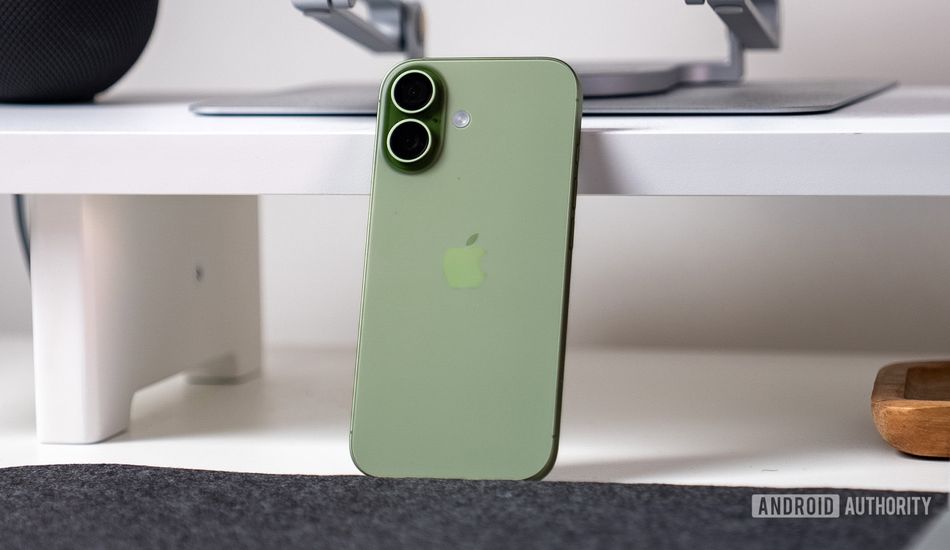
I'm not talking about the high-end iPhone 17 Pro or the fancy iPhone Air. No, the standard iPhone 17 is the one that's turning heads. It's set a new benchmark for smartphones, and in my opinion, Android manufacturers should be scrambling to match or exceed it in 2026. This is why I believe the iPhone 17 is the most important phone of the year.
Why the iPhone 17 Matters
What makes a smartphone "good"? We consider things like hardware, display, cameras, performance, battery, and overall value. The iPhone 17 hits all these marks surprisingly well. While the design isn't drastically different from the iPhone 16, features like the Ceramic Shield 2 glass, MagSafe, and customizable Action button create a seamless, premium user experience.
The display is a major upgrade. The standard iPhone finally gets a 120Hz screen, a feature previously reserved for the Pro models. This isn’t just any 120Hz display; it's an LTPO panel that scales from 120Hz down to 1Hz. That means you get the same smooth experience and always-on display functionality as the more expensive iPhones.
The cameras also get a boost. Apple upgraded the ultrawide camera to a 48MP sensor, the same one found on the Pro model. Plus, there's the new 18MP Center Stage front-facing camera, again, straight from the Pro lineup. Performance is, as always, top-notch thanks to the A19 chip, which outperforms Google's Tensor G5 and rivals Qualcomm's best. Add to that improved chipset efficiency and a bigger battery, and you've got significantly longer battery life.
But the real kicker is the value. You get a well-built phone with an upgraded display, better cameras, a faster chip, and a bigger battery, all at the same $799 starting price as the previous model. Plus, Apple doubled the base storage to 256GB. It's when you compare the iPhone 17 to similarly priced Android phones like the Google Pixel 10 and Samsung Galaxy S25 that you see how far ahead Apple really is.
While the Pixel 10 and Galaxy S25 are excellent phones, they don't quite measure up to the iPhone 17 spec-for-spec. For example, while all three phones have 120Hz OLED screens, the Pixel 10 lacks LTPO tech, limiting its refresh rate. The Galaxy S25 has LTPO, but the iPhone 17's display is brighter and has a better anti-reflective coating. And while Google and Samsung offer telephoto lenses, the iPhone 17 boasts superior ultrawide and selfie cameras, along with unmatched video recording capabilities.
The iPhone 17's performance is far superior to the Pixel 10, and the Galaxy S25 lacks built-in magnets. The iPhone 17 is also the only one with a UWB chip and 256GB of storage as standard. While some might argue that these are minor advantages, they add up to a more complete package than any competing Android phone.
As an Android user myself, it pains me to say this. I use an Android phone every day, and I don't plan on switching to iPhone anytime soon. But it's undeniable that Apple has delivered a better entry-level flagship than Google, Samsung, and most other Android brands in 2025.
If someone asked me to recommend a smartphone for around $800, I'd have a hard time not recommending the iPhone 17. If you're okay with iOS, it offers objectively better value than its Android counterparts. This is a statement that would have been unthinkable a few years ago.
Looking ahead to 2026, Android brands need to step up their game. Google needs to improve its secondary cameras and display tech. Samsung needs to incorporate built-in magnets, better cameras, and more storage. The iPhone 17 has raised the bar, and it remains to be seen whether Android can keep up.
Source: AndroidAuthority