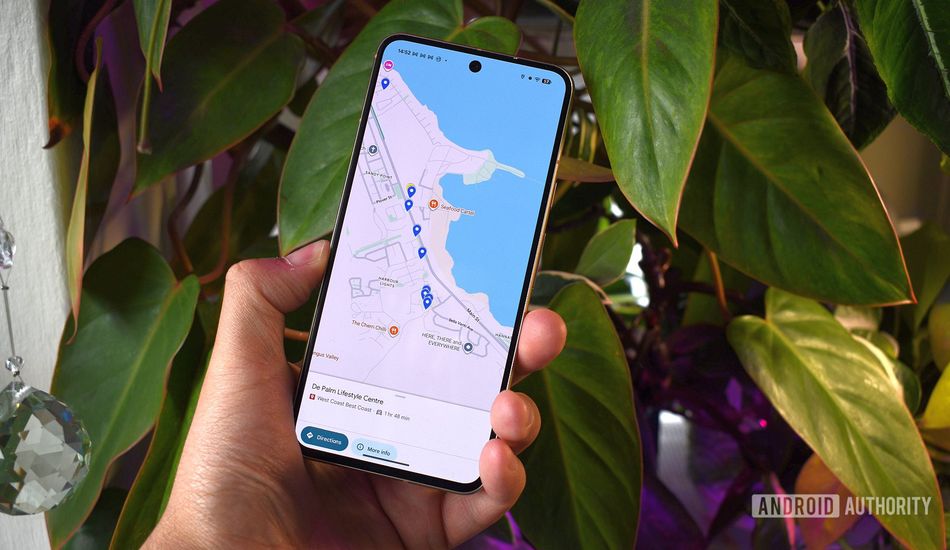
Android 16 Refines Location Privacy with Smart, Density-Aware Accuracy
It's a common scenario: you download an app, and it immediately asks for your location. While many apps genuinely need this information to function correctly, like navigation tools, others might be a bit too curious. That's where Android's location permission settings come in, offering both precise and approximate options.
When an app requests precise location, it gets your exact coordinates, usually accurate within a few meters. However, when an app asks for approximate location, it only receives a general area, potentially spanning several square kilometers. This is generally OKAY for apps that don't require pinpoint accuracy.
However, and this is a big "however," the approximate location setting wasn't always as private as it seemed. In rural areas, a broad estimate could still be enough to identify your specific location, especially if there were only a handful of buildings or roads nearby. It kind of defeats the purpose, right?
Android 16 to the Rescue
With Android 16, Google is trying to solve this issue by introducing "density-based coarse locations." Basically, the system now checks the population density of your area. If you're in a sparsely populated zone, it provides apps with an even less precise location estimate. The idea is to ensure that the "approximate" location feels truly anonymous, whether you're in a bustling city or a quiet countryside.
Under the hood, Android 16 achieves this by using "population density providers." These providers, often part of Google Play Services, assess the population density at a specific location. While Google Play Services is the likely candidate to handle this, phone manufacturers can implement their own providers.
While there's evidence suggesting that Google Play Services supports this feature, it's not entirely clear if it's fully active. I've noticed the developer flag for it enabled on my Pixel devices, but further testing is needed. So, the next time I find myself in a rural area, I'll definitely be checking to see if the approximate location is even rougher than usual.
Google is also working on improving overall location accuracy on Android. I heard about a project called "Bluewave" which aims to combine data from satellites and base stations for more precise positioning. If it lives up to the expectations, it could make location services on Android significantly better.
Ultimately, I believe it's really positive to see Google prioritizing both safety and accuracy in location tracking. Location services are incredibly useful, but responsible use is key. Hopefully, more apps will opt for approximate location, especially with the enhancements in Android 16.
Source: AndroidAuthority